
|
||||||||||||
 |
||||||||||||
 |
|
|||||||||||
|
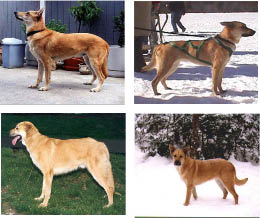
Coat- The coat of the Chinook is double and medium in length, but never so long as to obscure the clean-cut outline of the dog. The undercoat is soft, dense, and downy in texture. The guard hairs of the outer coat are straight, coarse, and lie close to the body. It should be noted that a less dense coat in warmer climates is normal. The neck is well-furnished with hair, which forms a protective ruff blending into the apron. The tail is well-furred with longer hair at the base and underside of the tail. The groin and inside of the rear legs are protected by coat. The Chinook is shown naturally and trimming is not acceptable. Faults-long coat, thin coat, lack of double coat in cold climate, unprotected belly and groin. Color- The usual colors range from Silver Fawn, Palomino, Fawn, Tawny, and Red-gold, with Tawny or Fawn being the preferred. Historically, the tawny color has been a distinguishing characteristic of the breed. Black markings on the inside corners of the eyes are preferred. Black, dark gray, or dark tawny markings on the ears and muzzle are often seen, with black being preferred. Black guard hairs may be found throughout the coat and tail, but should never detract from the overall coat color. White markings are allowed on the cheeks, throat, chest, breeches, toes, and underside. Gait- The Chinook�s gait is smooth and seemingly effortless. He is quick and light on his feet, and when in the show ring should be gaited on a loose lead at a moderately fast trot, exhibiting good reach in the forequarters and good drive in the hindquarters. The topline should appear level. When the front leg is fully extended, the foot should reach to a perpendicular line drawn from the center of the chin to the ground. Viewed from behind, the rear pads should be fully visible. Faults- crabbing |
||||||||||||
 |
||||||||||||