
|
||||||||||||
 |
||||||||||||
 |
|
|||||||||||
|
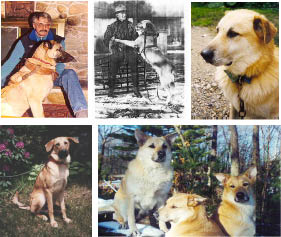
The neck is strong and moderately arched. The skin on the neck is pliable and the dewlap should not be pendulous or excessive. The neck fur is slightly longer than the body fur and forms a protective ruff. The topline is level when gaiting. Back will be powerful, muscular, and have a slight arch over the loin, sloping slightly downward at the croup. Chest is well-developed, deep (to the elbow), and well sprung with a distinct tuck up at the loin. The forechest extends well in front of the legs. The body is well proportioned. Tail- The gentle sickle tail is set just below the topline and has an overall well-furred appearance. The tail is distinctly flattened on the sides, with longer hair occurring on the underside and at the base of the tail. When relaxed, it reaches approximately to the hock with a slight curve at the tip. When alert, the tail is carried up in a graceful sickle curve but does not curl to either side of the body, nor does it snap flat against the back. Both positions are acceptable when gaiting. The Chinook tail is never docked. Faults-tail set too high or low. Forequarters- The shoulders are moderately laid back. The scapula and upper arm form an angle of about 110 degrees. When standing, the forelegs are placed directly under the withers. The forelegs are straight, well-muscled, and moderately boned. The shoulder blade and upper arm are roughly equal in length. When viewed from the front, the legs are moderately spaced, parallel and straight, with the elbows close to the body and turned neither in nor out. Pasterns are short and strong. A slight slanting of the pastern causing the dog to toe out not more than 10 degrees so that the dog pushes off from the center toes is allowed. Dewclaws on the forelegs may be removed. The feet are of the snowshoe type, with moderately webbed toes, dark pigmented pads, and are well-furred, even between toes. The front feet turn slightly outward. Faults-straight shoulders, loose shoulders, weak pasterns, too wide or narrow in the front, out at the elbows, soft or splayed toes, fine bone. Hindquarters-When standing and viewed from the rear, the hind legs are moderately spaced and parallel. The upper thighs are well muscled and powerful, the stifles moderately angulated, the hock joint well-defined and set low to the ground. When viewed from the rear, the legs stand and move true in line with the movement of the front legs. Dewclaws, if any, are to be removed. Faults-straight stifles, cow hocks, sickle hocks. Neck too short or long, barrel chest, weak or slack back, roached back, sloping topline.
|
||||||||||||
 |
||||||||||||